

Mobility Trends that Will Shape 2026
2026 is shaping up to be a defining year for mobility. Here's what's driving the shift...

A wave of technical, regulatory and commercial shifts is accelerating the evolution of global mobility. As aerospace, automotive, autonomy and advanced transportation converge, 2026 is set to be a defining year for the organisations building next-generation platforms and systems.
Here are the mobility trends that will shape what comes next.
Autonomy Moves From Prototype to Scaled Deployment
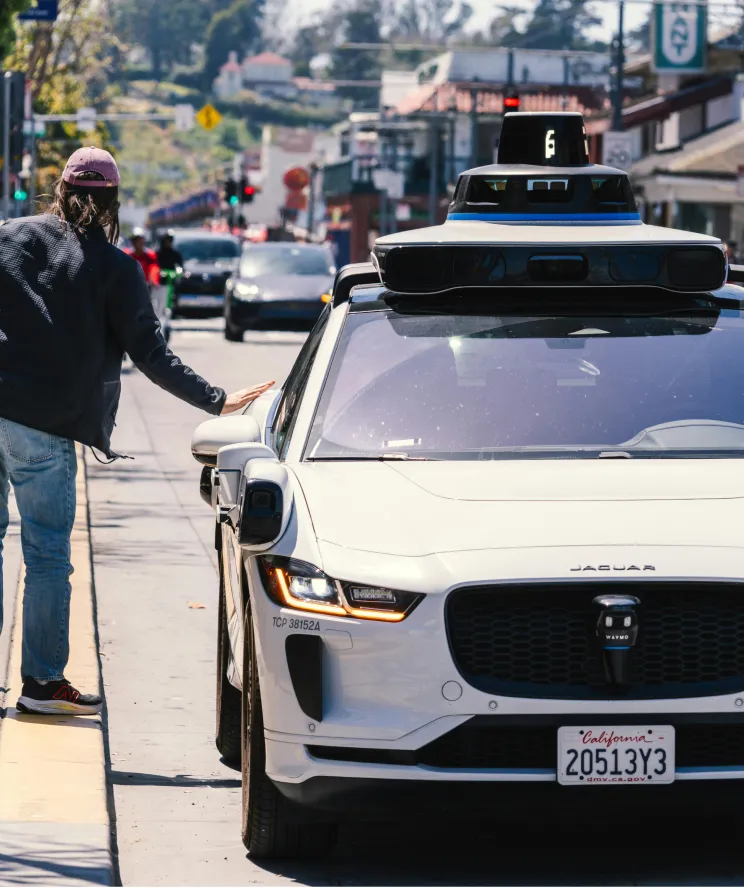
Autonomous systems are maturing fast. Across aviation, defence and ground mobility, companies are shifting from controlled demonstrations to real operational environments. The focus is now on certifiable software, resilient perception, safety assurance and robust AI models that perform consistently in edge cases.
This transition requires deep-specialist capability in robotics, flight controls, onboard ML, systems engineering and verification. Talent remains the primary bottleneck.
Electrification Enters Its Second Phase
The first wave of electrification was about feasibility. The next wave is about performance, efficiency and cost.
Battery density improvements, lightweight materials and thermal management breakthroughs are pushing electric platforms into new categories. In aviation, hybrid-electric architectures are gaining traction as a bridge to full electrification. In automotive, high-voltage engineering and energy optimisation are becoming core skills that OEMs must secure to stay competitive.
The Rise of Dual-Use Technology Across Aerospace and Defence
The lines between commercial and defence innovation continue to blur. Breakthroughs in AI, autonomy, advanced materials and digital engineering are moving into defence programmes at unprecedented pace, reshaping the required talent landscape.
For mobility organisations working near the defence boundary, securing engineers who understand certification, safety, mission systems, cyber resilience and system-of-systems integration will be critical.
Digital-First Engineering Becomes the Default
Model-based engineering, simulation-driven development and digital twins are moving from early adoption to standard practice. This shift is transforming how organisations design, test and validate platforms, allowing teams to compress timelines and reduce physical prototyping costs.
The demand for engineers who can operate at the intersection of software, systems, modelling and data is growing rapidly. These hybrid profiles are increasingly hard to source and retain.
Global Mobility and Relocation Become Strategic
As talent shortages intensify, companies are widening the search beyond local markets. The ability to relocate niche engineering and technical talent quickly and compliantly is becoming a competitive advantage. Countries investing heavily in mobility and aerospace, such as the UAE, UK and US, are attracting international specialists at scale.
Mobility strategy is no longer operational. It is strategic, shaping how fast organisations can hire, build capability and meet programme milestones.
Certification Pathways Evolve for New Mobility Platforms
Regulators are adapting frameworks for eVTOLs, autonomous aircraft, next-gen propulsion and AI-enabled systems. This evolution will continue through 2026, creating new requirements for safety engineers, airworthiness specialists and leaders who understand both technology and regulation.
Organisations that secure these niche skill sets early will move faster and more confidently through certification gates.
Convergence Becomes the New Normal
The future of mobility is no longer defined by individual sectors. Aerospace is borrowing from automotive, defence is integrating commercial AI, and autonomy is becoming a shared capability across everything that moves.
This convergence is reshaping talent needs, organisational structures and engineering approaches. Companies that understand these intersections will be the ones driving innovation forward.
Shaping the Future of Mobility
2026 will reward organisations that build strong technical foundations, secure the right talent early and adopt agile engineering models. As mobility becomes more connected, autonomous and electrified, deep-specialist capability will be the true differentiator.
If you’re scaling mobility programmes or building next-generation platforms, Akkar can connect you with the deep-specialist engineering and technology talent that makes progress possible.
Interested in working with us?
Reach out to us, and our team will connect with you within 24 hours.